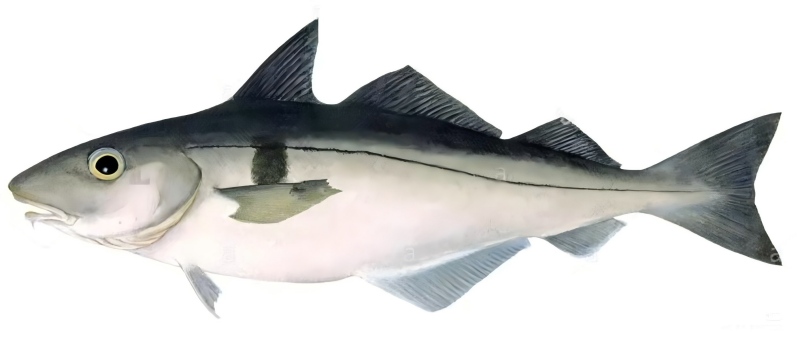
Entering 2026, the overall transaction volume of the wholesale market for true cod and black cod in the United States is limited, but the prices remain firm. The market demand remained stable after the festival, mainly supported by the cost of raw materials rather than driven by the recovery of terminal consumption.
In the second week of January (January 5th to 11th), the overall trading pace in the US market was moderate. Buyers mainly purchased on demand, and market quotations continued to reflect the high costs of upstream raw materials. Industry insiders point out that the current market shows the feature of "cost-driven price" rather than demand-driven.
The prices of "one-time frozen" products have remained basically stable. The quotations for all specifications of Alaskan cod block jelly remained unchanged. The prices of Icelandic cod and black cod also stayed at a high level. Sellers' quotations were firm, and buyers lacked the motivation to lower prices. The market showed price "stickiness".
The quotations for "double-frozen" products have slightly increased. The price of Atlantic cod loin processed in China has risen by 0.10 US dollars per pound, mainly reflecting the increase in raw material replacement and processing and transportation costs. The price of Atlantic cod fillets also rose by about $0.05 per pound, and similar increases were recorded for both block frozen and single frozen (IQF) products processed in China.
For black cod, the IQF of secondary frozen products processed in China also increased by 0.05 US dollars per pound, indicating that black cod remains a relatively resilient category among white fish products.
The market for Pacific cod remains stable. The quotations for the second frozen Pacific cod loin remain unchanged, and there is no significant change in the prices of the segmented and IQF products. Industry insiders believe that buyers remain cautious in their purchases, while sellers, due to high replacement costs, have no intention of reducing prices for the time being.
Raw material prices are the main supporting factor for the firmness of the market. The headless and offal (H&G) Atlantic true cod from the Barents Sea entering China by the end of 2025 is at or close to historical highs. The reasons include the tightening of fishing quotas in 2026, the expected decline in supply, and the access and sanctions issues between Russia and Norway. Meanwhile, the prices in Iceland's auction market remained firm at the beginning of the year, and the traditional January low-price adjustment did not occur.
Therefore, although the demand in the US market seems lackluster on the surface, the high-cost structure keeps the price bottom stable. It is widely believed in the industry that unless raw material prices fall significantly, quotations will remain firm in the near future.
In addition, after the restoration of the North Atlantic cod resources in Canada in 2025, the fishing quota will be significantly increased, driving up production and exports, and making Canada once again an important supplier. However, the current increase is still not sufficient to significantly ease the global supply tightness.
Overall, the wholesale market for true cod and black cod in the United States continued to operate at a high level in early 2026. The prices of "secondary frozen" products are likely to continue to rise slightly to cope with the pressure from the raw material end, while "primary frozen" products are expected to remain stable at a high level. The subsequent trend still depends on the fluctuations in raw material prices and the recovery of downstream market demand.