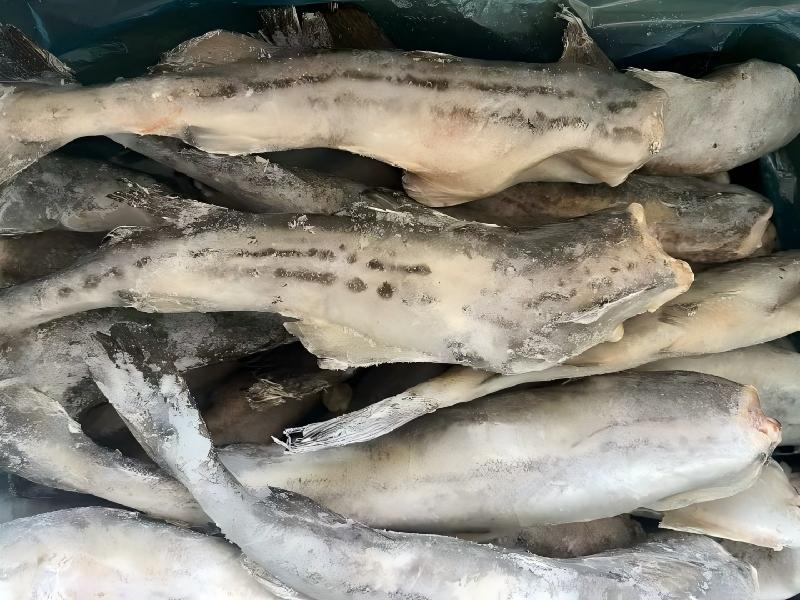
Against the backdrop of the approaching Spring Festival and a slowdown in market transaction pace, the price of Russian Pollock raw materials has not dropped significantly as in previous years. Feedback from multiple parties in the industrial chain indicates that the price of Russian pollock H&G (head and dirt removed) remains at a historically high level and has continuously supported the prices of downstream fish fillet products. Based on the previous market price trend, the current firm momentum in the raw material sector is now being transmitted to the single-frozen and secondary frozen fish fillet markets.
From the perspective of raw material prices, the mainstream transaction level of Bering Sea pollock H&G has remained stable at $1,700 - $1,720 per ton (25+), while the price of the same specification from the Sea of Okhotsk is approximately $1,650 per ton, which is basically consistent with the high range in Novemy-December 2025 and has not shown the significant decline that the market had once expected. Industry insiders point out that the resources available for H&G production by Russian fishing vessels in January and February are limited. Some fleets have shifted their production capacity to fish fillets, surimi or herring. Coupled with the fact that Chinese buyers still need to replenish their inventories before the Spring Festival, this provides realistic support for prices.
From the demand side, the acceptance of pollock raw materials in the Chinese market remains relatively high. Although there is theoretical price differentiation space for H&G of some non-EU-certified vessels, driven by domestic consumption and processing demands, the actual transactions have not shown significant discounts. In some cases, they are even higher than the mainstream market level. The market generally reflects that the resumption of work after the Spring Festival requires a certain amount of raw material reserves, which makes the purchasing behavior more inclined towards "passive replenishment of inventory" rather than waiting for prices to fall.
Against this backdrop, the price of single-frozen PBO pollock fillets has shown clear signs of strengthening. Quotations for single-frozen fish fillets from Russia and the United States have been continuously rising, with some transactions already higher than the levels in early January. As Russian products still need to be subject to a 13.7% tariff when entering the EU market, their post-tax costs are generally higher than those of American products, further strengthening the upward trend of the price center.
Meanwhile, the price of secondary frozen pollock fillets in China is also facing upward pressure. Processing enterprises generally estimate that under the current H&G cost level, if the price of fish fillets is not adjusted accordingly, it will be difficult to cover the costs of raw materials, processing and logistics. Many industry insiders predict that the price of secondary frozen fish fillet will complete a new round of pricing in the short term, with the time window mainly concentrated around the Spring Festival.
Overall, the price of pollock H&G remains at a high level during the traditional seasonal decline window and has become the core variable in the current white fish market. Against the backdrop of a restricted supply structure and high raw material costs, the price center of both single-frozen and double-frozen products is unlikely to shift substantially in the short term. The focus of market competition is shifting from "whether to raise prices" to "to what extent they can rise".