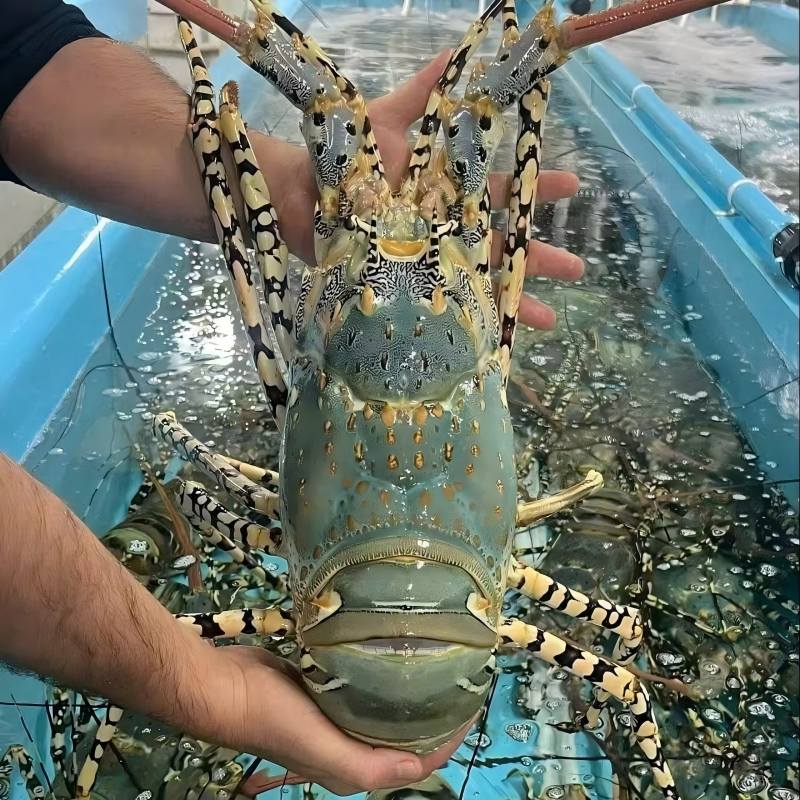
Vietnamese lobster farming is being strangled by the "lack of seedlings available". According to data from the General Department of Fisheries of Vietnam, Vietnam has yet to achieve commercial artificial breeding of lobster seedlings. The seedlings used for aquaculture can only rely on wild-caught seedlings or imports. Meanwhile, Southeast Asian supply countries such as Indonesia and Malaysia have successively tightened their exports, directly cutting off the regular trade channels. Khanh Hoa Province, one of the major lobster farming provinces in Vietnam, saw its lobster fry imports completely drop to zero in the first half of 2026, while the province's annual demand for fry amounts to 60 to 70 million.
Khanh Hoa Province used to be highly dependent on imported seedlings. In 2020 and 2021, the province imported 41.5 million crayfish fry each year. The import volume peaked at 83 million in 2022, dropped to 59 million in 2023, fell to 11.92 million in 2024, rebounded to 33.07 million in 2025, and then dropped to zero in the first half of 2026. Local wild seedlings can only meet about 5% of the demand, and the remaining gap is only filled by the neighboring provinces of Gia Lai and Dak Lak.
The seedlings have been cut off, but the scale of breeding is surging. In 2023, the number of crayfish cages in this province was 74,443, with an output of 1,800 tons. By 2025, the number of cages will increase to 126,552, with a production volume of 12,749 tons. Within two years, the number of cages will grow by 70% and the production volume will increase by more than six times. In the first half of 2026, the number of net cages had reached 137,136, and 10,271 tons of commercial lobsters were produced.
Amid the rift between supply and demand, smuggled seedlings are growing wildly. On August 17th, the police in Khanh Hoa Province seized over 180,000 live lobster fry from the checked luggage of two passengers who arrived at CAM Ranh International Airport from Singapore. The case involved an amount of approximately 7 billion Vietnamese dong (about 268,000 US dollars). A criminal case has been filed. The two suspects are an Indonesian and a Vietnamese. This is not an isolated case. In October 2025, customs at Jakarta's Sukarno-Hatta International Airport intercepted a batch of goods bound for Singapore. Eight suitcases contained 172,600 crayfish fry, and four suspects were arrested. A month earlier, the police in Chanok, West Java Province, intercepted a vehicle carrying 7 boxes of a total of 50,000 crayfish fry. In June 2026, the Malaysian Maritime Enforcement Agency seized a wholesale of lobster fry bound for Singapore at the Tanjong Belongkor Pier, with a value of approximately 2.7 million ringgit (about 669,000 US dollars). The case was handled under the country's Fisheries Act 1985.
Indonesia is one of the main sources of seedlings for Vietnam. Regulation No. 7 of 2024 issued by the Ministry of Oceans and Fisheries of the country implements a licensing management system for the export of lobster seedlings, aiming to keep the seedlings for domestic breeding, guide the export of large-sized adult shrimp, and protect wild resources. The legal channel for Vietnamese enterprises to import seedlings through investment agreements with Indonesia was also terminated about a year ago.
Behind smuggling lies the genuine export dividend. According to data from the Vietnam Association of Seafood Processors and Exporters (VASEP), driven by the demand for live and high-end aquatic products in the Chinese market, Vietnam's lobster exports reached 585 million US dollars in the first half of 2026, up 44.3% year-on-year, accounting for approximately 10% of the country's total aquatic product export revenue. China is the largest buyer, with a procurement amount reaching 841 million US dollars in 2025. Exports are almost entirely supported by green lobster: In 2025, the export of young lobsters reached 843 million US dollars, accounting for 98.3% of the total lobster export value. The export value of tropical rock lobsters has dropped to approximately 4.6 million US dollars due to the technical barriers in China.
Khanh Hoa Province has begun to promote the research and development of artificial seedlings and is cooperating with central ministries and commissions at the trade level to seek the restoration of seedling import channels from Indonesia, the Philippines, Myanmar, Sri Lanka and Singapore. When these channels are connected will determine the seedling release rhythm of the 137,000 cages across the province in the next seedling release season.