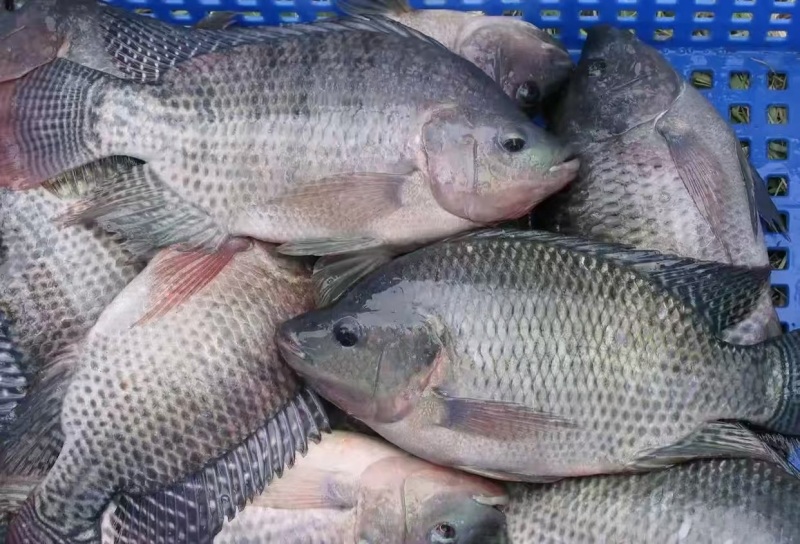
On October 7, 2026, the Chinese tilapia market witnessed two parallel trends: under the purchasing criteria of processing plants, the prices of 500-800 grams of raw materials in Guangdong, Guangxi and Hainan remained basically the same as before the National Day holiday. The wholesale prices of pool heads and primary markets across the country continued to rise. The two sets of data correspond to different trading links and cannot be directly mixed into the same price caliber.
During the National Day Golden Week, processing enterprises generally took a holiday, and the purchase of raw materials decreased significantly. The arrival prices of 500-800 grams of raw materials in Guangdong and Guangxi remained basically stable, while in Hainan, the prices rose slightly by 0.10 yuan per kilogram based on the weekly monitoring standards of the industry. Some factories plan to resume production on October 8, 2026, and the purchasing activities will gradually resume in the later part of the 41st week.
The temporary halt in raw material procurement has not changed the annual supply pattern in the breeding area. The number of fish released in the spring of 2026 is about 40% to 50% less than that of previous years, and the number of fish available for processing by some farmers in their ponds has declined. After Hainan suffered from severe floods earlier, some processing enterprises turned to Guangdong for procurement. Cross-regional fish purchasing has also increased the competitive pressure on the Guangdong production areas.
Meanwhile, on October 7th, the prices in the national wholesale market were still on the rise. Industry monitoring data shows that the wholesale price of pool heads and first-grade products weighing less than 0.5 kilograms is 5.05 yuan per jin, those weighing 0.5 to 0.75 kilograms are 5.98 yuan per jin, and those weighing over 1 kilogram reach 6.68 yuan per jin. All three specifications rose compared with the average price in September. Among them, the average price of the 0.5-0.75 kilogram specification in October was 5.92 yuan per jin, with a month-on-month increase of 2.60%.
The year-on-year increase was also quite significant. The average price of 0.5 kilograms or less in early October was 4.97 yuan per jin, an increase of 14.78% compared with the same period in October 2025. The average price of the 0.5-0.75 kilogram specification rose by 4.96% year-on-year. The price of specifications over 1 kilogram rose by 5.06% year-on-year. The price increases of different specifications vary, and the raw material prices do not change simultaneously in all market links.
Another pressure faced by processing enterprises comes from the export market. The United States remains an important destination for tilapia from China, but buyers are more cautious in their purchases, and the speed of inventory digestion determines the pace of quotation transmission. In 2026, China's tilapia exports to the United States will still be affected by tariff costs. Currently, Chinese-origin tilapia-related products are subject to a combined tariff rate of approximately 37.5%, which includes a 25% Section 301 tariff and an additional 12.5% measure.
The inventory changes in the US market also make it difficult for processing plants to quickly pass on all raw material costs to buyers. In the first half of 2026, the US import market witnessed a coexistence of declining imports and inventory pressure. Buyers were more inclined to purchase at the actual sales pace, and the price of tilapia fillets lacked the conditions for a rapid increase.
The profit pressure on Chinese processing enterprises thus still exists. On one side, the cost of raw material procurement is rising; on the other side, overseas buyers are more sensitive to quotations, and it takes time for order prices to be passed on. The reduction of raw materials caused by the reduction of seedlings in spring is a variable in the breeding cycle, while the suspension of purchases during short-term holidays is a change in the purchasing rhythm. The impact time of the two on prices is not the same.
After resuming work on October 8th, processing enterprises in Guangdong, Guangxi and Hainan will resume normal procurement, which will become the first node for observing raw material prices. The larger trading node is the 2026 China International Fisheries Expo, which will be held at the Hongdao International Convention and Exhibition Center in Qingdao from October 28th to 30th. According to the official information of the exhibition, this year's exhibition is planned to use a net exhibition area of 58,000 square meters. Currently, 1,562 enterprises have participated in the exhibition, and professionals from 139 countries and regions are expected to attend.
In late October, the order negotiations for the Christmas season, the inventory levels of processing enterprises and the prices accepted by US buyers will form a new price overlap with the quotations for 500-800 grams of raw materials after the resumption of purchasing in Guangdong, Guangxi and Hainan. The brief suspension of purchases caused by the National Day holiday will gradually disappear after October 8th. The first round of purchase prices after the market resumes trading will become an important price node in the next stage.