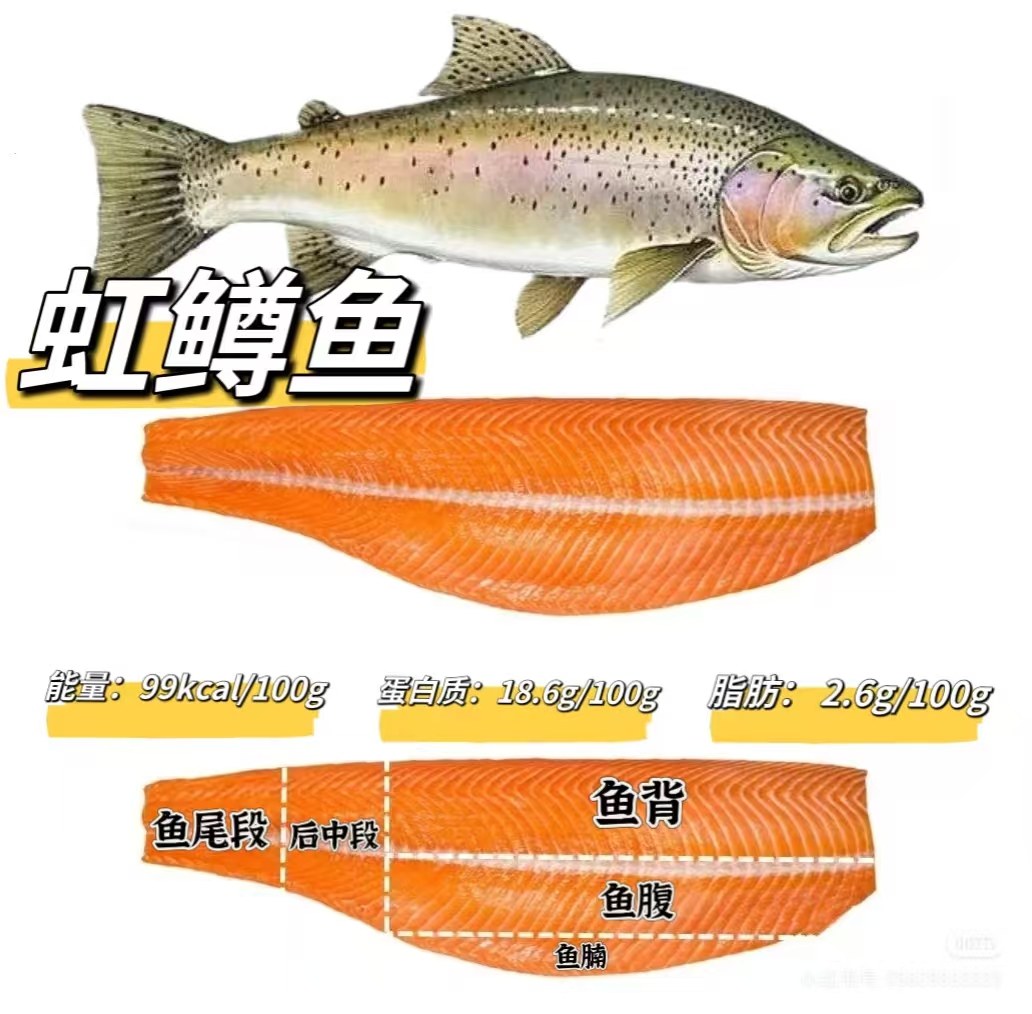
From January to October 2025, the export of freshwater rainbow trout in Qinghai Province achieved steady growth, and the industrial pattern gradually took shape. According to statistics, enterprises in the province have cumulatively exported 5,948.5 tons of various rainbow trout products, with an export value of 53.776 million US dollars. This indicates that the competitiveness of inland freshwater aquaculture areas in China in the international high-end market is significantly increasing.
From the monthly trend, the export of rainbow trout from Qinghai Province shows obvious seasonal characteristics. June to August is the peak period of the year. The export volume in these three months accounts for more than 60%. In June alone, 1,376.6 tons were exported, setting a new annual peak. March was a "small peak" in the first half of the year, with exports exceeding 1,000 tons. January and February as well as October are the off-seasons, with the export of fresh products being the main focus. Data shows that the export pace of Qinghai rainbow trout is highly synchronized with international market demand, reflecting the continuous improvement of the maturity of the industrial chain in the cold chain transportation and processing links.
From the perspective of product structure, the export of rainbow trout from Qinghai is mainly frozen products, among which frozen trout accounts for 94.75% of the total export volume and 88.55% of the value. The average unit price is 8,450 US dollars per ton, making it the most stable basic export product. High value-added products have seen significant growth. Frozen trout fillet and smoked trout accounted for 5.3% and 0.8% of the export value respectively, with unit prices reaching 13,185 US dollars per ton and 14,724 US dollars per ton respectively, indicating that the profit margin in the processing link is constantly expanding. In terms of market structure, the export of rainbow trout from Qinghai Province shows the characteristics of "high concentration and regional differentiation". The Russian Federation is the absolute main market, accounting for 85.98% of exports and 82.08% of exports. It is followed by Thailand (5.7%) and Kazakhstan (4.1%). The combined share of the three major markets reached 95.8%, and the Herfindahl Index exceeded 0.7, indicating an extremely high degree of export dependence. It is worth noting that the Southeast Asian market has shown a significant growth trend. Thailand, Malaysia and Singapore have become the main destinations for fresh products and chilled trout, among which Thailand has taken the leading position in fresh fish imports. In terms of product and market matching, frozen whole fish are mainly sold to Russia and Central Asian countries, with a very high concentration. The export regions for frozen fish fillets and smoked products are more dispersed, mainly flowing to emerging markets such as Malaysia, Singapore and Mexico. Live trout are mainly found in Southeast Asian countries such as Thailand and Malaysia. Data shows that the export of trout from Qinghai Province has formed a multi-level structure ranging from whole fish to deep-processed products. In terms of price, the price of the basic product frozen trout has remained stable at $8,450 per ton, while the unit price of processed products such as frozen fish fillets and smoked trout is over 50% higher, further highlighting the important direction of industrial structure upgrading. The expansion of exports of high value-added products will become a key path for the trout industry in Qinghai to enhance its profitability and market resilience. Overall, in the first ten months of 2025, Qinghai Province has achieved new breakthroughs in the export of freshwater rainbow trout in terms of scale, structure and market layout. The total export volume is nearly 6,000 tons and the value of goods exceeds 53 million US dollars. The industry has begun to take shape. Frozen products take the lead, while fine processing develops steadily. The Russian market is stable and the potential of Southeast Asia is prominent. In the future, the export of Qinghai trout still needs to continue to make efforts in three directions: reducing reliance on a single market, expanding diversified markets, and enhancing processing added value, in order to achieve a comprehensive upgrade from a resource output type to a brand value type.