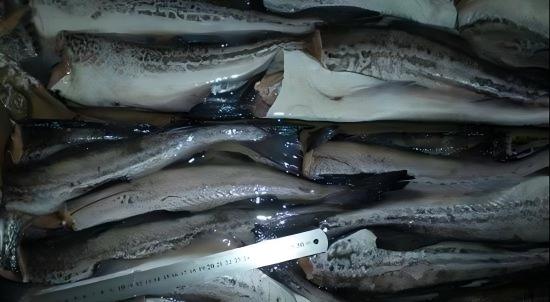
The U.S. will reduce its pollock fishing quota in bays by 25% in 2026, while the Bering Sea will remain stable. The overall impact is limited.
The North Pacific Fisheries Commission (NPFMC) of the United States has recently finalized the 2026 pollock quota plan: the quota for pollock in the Gulf of Alaska has been reduced by 25% to 134,000 tons, while the quota for the Bering Sea remains unchanged at 1.375 million tons. Despite a significant reduction in the Gulf quota, as the Bering Sea still accounts for over 90% of the United States' pollock production, the industry generally believes that this adjustment will have a limited impact on the global pollock supply and demand pattern. However, the reduction in quotas reveals a signal that the US fishery management is turning to a "more conservative" approach regarding the uncertainty of resource assessment
【 1. The quota for pollock in the Gulf has been reduced by a quarter, hitting a new low in nearly a decade 】
According to the resolution passed by the NPFMC, the total permitted catch (TAC) of pollock in the Gulf in 2026 is 134,118 tons, a 25% decrease from 2025 and the lowest level in nearly a decade.
The quotas for each major fishing area are as follows:
Shumagin Area (610 area) : 27,453 tons (year-on-year -25%)
Chirikof Area (620 area) : 60,477 tons (year-on-year -31%)
Kodiak Area (630 area) : 37,936 tons (year-on-year -22%)
West Yakutat Region (640 region) : 3,883 tons (year-on-year -26%)
The committee pointed out that due to the previous "shutdown" by the US government, the biomass survey for 2025 failed to be completed as scheduled. This quota assessment is mainly based on the stock data of 2024. To ensure resource security, a more cautious reduction rate has been adopted.
Analysts point out that although the quota for Gulf pollock has been significantly reduced, this fishing area accounts for only about 10% of the total production in the United States. Its main products are mostly used in the domestic market and regional processing plants, and its impact on international raw material trade is limited.
【 2.The Bering Sea quota remains stable, continuing to support the main global supply force. 】
Meanwhile, the NPFMC confirmed that the TAC of Bering Sea pollock in 2026 will be 1.375 million tons, which is basically the same as that in 2025. Although trawling survey data at the end of this year showed that the bottom biomass index had dropped by approximately 30%, the committee believes that this change more reflects a shift in the focus of biological distribution rather than a real decline in population size.
The Committee on Science and Statistics (SSC) stated at the meeting that the data from the middle trawling and the survey of the North Bering Sea indicated that fish stocks were moving northward, and the overall resources remained within the normal range of variation, with "no significant biological risk".
Therefore, maintaining the stability of the quota is a "prudent and reasonable" decision.
However, this year's Bering Sea pollock fishing season still saw approximately 47,000 tons of unfulfilled quotas (about 4% of the total), mainly concentrated in the nearshore processing sector. The reasons include avoiding herring mixed fishing areas, the increasing pressure of salmon concurrent fishing and the decline in the seasonal operation efficiency of fishing vessels. The industry is concerned that if this trend of "under-fishing" continues, even if the quota remains the same in 2026, similar challenges may still arise.
【 3.Comprehensive Impact: The global supply and demand pattern remains generally stable. 】
Overall, the total GOA + BSAI catch in the United States in 2026 is expected to be approximately 1.51 million tons, a slight decrease of only about 3% compared to 2025
Therefore, in 2026, the supply of pollock raw materials from the United States will remain basically stable, and it will still play a "ballast stone" role in the processing and export industrial chains of China, Japan and other countries.
【 4.Industry Observation: Regulation Becomes more Cautious, and Cyclical Fluctuations may Intensify 】
Industry experts point out that although this round of quota adjustment has not caused a sharp market shock, it reflects a new trend in the regulation of the US fishery industry:
When data is uncertain, it is better to catch less than to take risks.
This means that if there are fluctuations in the biomass assessment of the Bering Sea in the future, the possibility of maintaining or reducing the quota will be higher than in the past.
Under the backdrop of global resource pressure and climate change, the "conservative management" of the United States may become the medium and long-term norm for the fishery in the North Pacific.
Overall, the 2026 pollock quota plan of the United States shows the characteristics of "steady tightening and conservative response". The reduction of quotas in the Gulf has limited impact, but its symbolic significance is obvious. The Bering Sea remains stable, injecting certainty into the global supply chain.
At a time when the resource assessment system is facing challenges, this balanced decision not only reflects the scientific and cautious policy logic but also indicates that the pollock fishery in the North Pacific will enter a new stage of stable output, controlled capture and reduced fluctuations in the future.