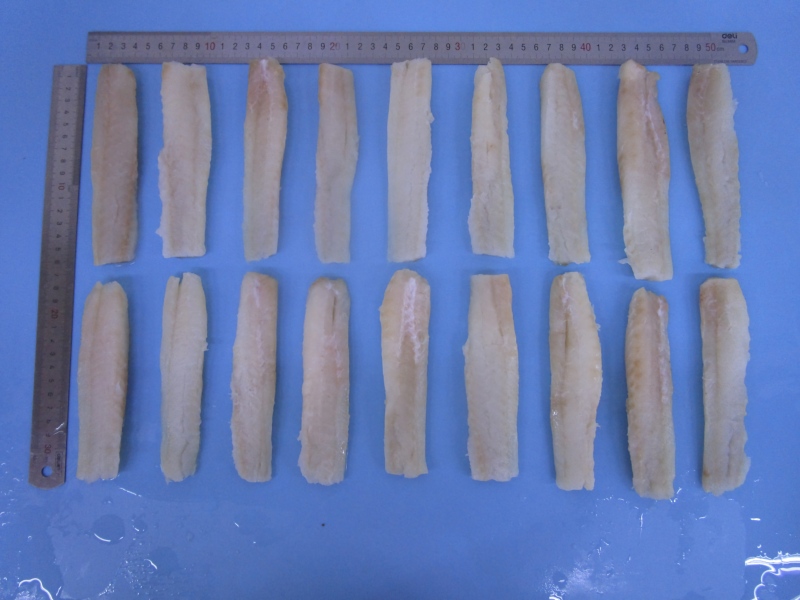
The transaction price of PBO frozen Pin Bone Out Block Fillets in the United States rose by $200 per ton in July compared with that in June. The latest transaction price exceeded similar products from China and Russia for the first time. The quotations for secondary frozen PBO block frozen fish fillets in China have simultaneously reached a new historical high, while Russian products have maintained the highest level set in June. Although the uncertainty surrounding the EU's sanctions on Russian aquatic products, which lasted for several weeks, has been significantly alleviated, the rising prices of raw materials, tight supply and the increase in shipping costs are still driving the global price of pollock fillet to continue to rise.
The European Commission had previously planned to include Russian cod, pollock and other aquatic products in the 21st round of sanctions, and was studying the gradual elimination of import quotas over a transition period of two to four years, ultimately halting the import of related Russian products. After multiple rounds of consultations among member states, aquatic products were eventually removed from the sanctions plan. However, before the EU officially confirmed the policy adjustment, the market remained on the sidelines for several weeks. Many Chinese export contracts were frozen, and the pace of Russia's purchase of headless and dirt-free pollock (H&G) also slowed down significantly. As the market gradually accepted that Russian aquatic products would not be subject to sanctions, transactions began to return to normal.
Russian exporters said that some Chinese processing enterprises still hope to wait until the EU officially releases the final document before deciding on their purchase and sales plans. Some enterprises have also begun to sign new orders for secondary frozen PBO block frozen fish fillets at higher prices. The latest assessment by UCN shows that the FOB quote for Chinese secondary frozen PBO block frozen fish fillets processed with Russian H&G raw materials has risen by 100 US dollars per ton compared to last month, reaching a new historical high.
Some downstream enterprises in Europe have indicated that currently, the transaction prices of some contracts are 200 to 300 US dollars per ton lower than the mainstream market level. Chinese export enterprises believe that the prices of newly signed spot orders are already 100 to 150 US dollars per ton higher than the current market assessment level. The freight rate for 40-foot refrigerated containers from Asia to Europe has doubled from the original level to $5,500 to $6,000 since May. Some shipping companies plan to further increase it to $7,000 in August. The continuous rise in sea freight costs has further pushed up the overall cost of exporting China's secondary frozen pollock fillets to Europe.
From February to April this year, some Chinese processing enterprises signed a large number of supply contracts with European customers when the price of H&G in Russia was still at a relatively low level. As the price of H&G in Russia keeps rising, some enterprises have begun to demand renegotiation of contract prices, and some orders have even been cancelled or delayed in delivery. European traders said that the delivery cycle has been extended to two to three months, and the procurement risk has significantly increased. Chinese processing enterprises have indicated that the rapid increase in raw material prices has far exceeded previous expectations, and they are under considerable pressure to continue fulfilling their obligations at the original contract prices.
On July 2nd, German chain retailers Aldi Sud and Aldi Nord have raised the retail price of their own brand 400-gram Fish Fingers from 2.49 euros to 2.99 euros, an increase of approximately 20%. The Iglo brand is currently priced at 4.89 euros, but the market generally expects that as the currently high-priced PBO fish fillets gradually enter the processing stage, there is still a possibility that the prices of terminal products such as European fish strips will continue to rise in the future. Some suppliers believe that temporarily keeping the retail price within 3 euros is conducive to reducing consumers' sensitivity to price increases. In the future, retailers may adopt a phased price increase strategy instead of raising prices sharply all at once.
As of July 7th, the cumulative production of PBO fish fillets in the US for Season B was 13,109 tons, a year-on-year decrease of 12%. The cumulative PBO output for the whole year was 61,861 tons, a year-on-year decrease of 15%. Although the catch of Bering Sea pollock increased by 5% year-on-year, due to the smaller size of the fish and the decline in yield, the recovery speed of fish fillet production was significantly slower than the growth of catch, and the market supply remained tight.
As of June 30, the cumulative output of PBO fish fillets in Russia was 61,982 tons, higher than 60,060 tons in the same period last year. H&G's cumulative output was 412,082 tons, which was basically the same as the same period last year. However, this year, the size of pollock caught in Russia was generally small. The output of Whole Round fish increased by 43% year-on-year to 87,350 tons. Market insiders say that some Russian processing enterprises have not yet obtained the EU import registration qualification, and the quantity of products they can supply to the European market is restricted, which also further intensifies the competition for white fish raw materials in the European market.