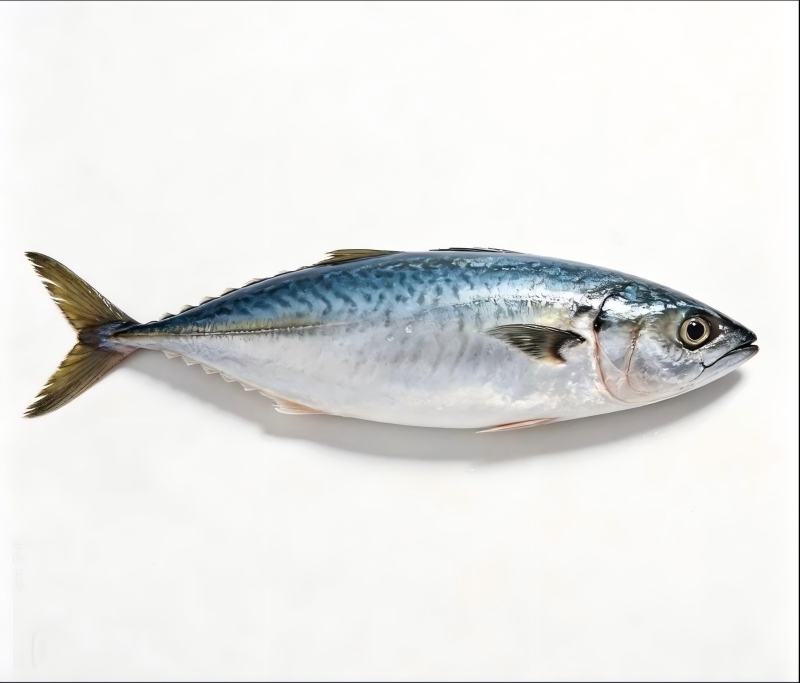
The 2026 Atlantic mackerel fishing season in Iceland has entered the middle stage, and the new season's products have begun to be quoted in Asia. Due to the significant reduction in quotas and the rise in production costs, the current intended price has for the first time comprehensively exceeded $5 per kilogram. However, buyers from Japan, China and South Korea generally choose to wait and see, and the Asian market has not yet formed an actual transaction benchmark.
The largest size is quoted at a maximum of $5.50
The quotations from different processors vary slightly. The CFR Asian quotation for the 300-500g specification is $5.00 - $5.10 per kilogram, for the 400-600g specification it is $5.15 - $5.20 per kilogram, and for the larger specifications of 500 grams and over 550 grams it reaches $5.40 - $5.50 per kilogram.
These prices are still the seller's quotations at present and not the confirmed market transaction prices. It was reported in the market that a Japanese importer purchased some of the products, but the deal has not yet been confirmed by the relevant buyer.
Compared with previous years, the quotations for this season have increased significantly. The opening price of 2023 is $1.95 - $2.15 per kilogram, and it will rise to $2.30 - $2.50 in 2024. It opened at around $2.90 in 2025, then rose to $3.80, and once exceeded $4 at the end of the quarter. Now, Icelandic producers have directly pushed their quotations above $5, once again setting a new record.
The core reason is the tightening of resource supply. Iceland's allocation of Atlantic mackerel quotas to its fleet in 2026 is only 29,232 tons, a 68% decrease from 90,152 tons in 2025. The sharp drop in quotas not only reduces the amount available for sale but also raises the cost of quota transfer among fishing enterprises.
Buyers from Japan and South Korea find the price unaffordable
Japanese importers believe that, based on the current market situation, the acceptable price is approximately $4.50 per kilogram. Some buyers can only raise it to a maximum of $4.60 - $4.70, which still has a significant gap compared to the quotations from Iceland. A Japanese buyer who was negotiating in Iceland was even considering returning home empty-handed because the price was too high.
If purchased at a CFR price of $5.50 per kilogram, plus Japan's 7% import tariff, customs clearance and domestic logistics costs, the estimated total cost upon arrival will exceed 960 yen per kilogram. Importers need to sell at least 1,000 yen per kilogram to domestic processing plants in order to avoid losses.
Chinese buyers are also not in a hurry to make purchases. Some enterprises have purchased Norwegian mackerel from the previous season for processing at the beginning of the year, and there will still be raw materials available in the short term. South Korean buyers also indicated that domestic inventories have not yet been fully digested, so there is no need to replenish immediately.
However, the final price still depends on the transaction price of raw materials in the Norwegian auction system. If Asia and Eastern Europe continue to resist high prices, the purchasing willingness of Norwegian processors will decline, and auction prices may fall back. The key to the current mackerel market is no longer whether sellers can offer higher prices, but whether buyers are willing to make a real deal.