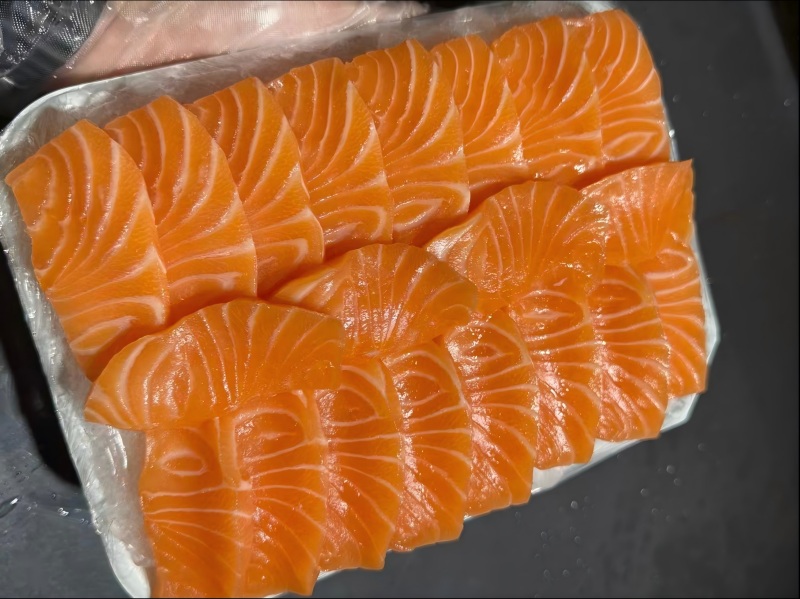
Nordic Aqua Partners' harvest in the second quarter increased by 80%, its operating EBITDA turned positive, the breeding cost dropped to 6.05 euros per kilogram, the commissioning of the second phase doubled the annual production capacity, and the detailed design of the 20,000-ton plan for the third phase was initiated.
The Ningbo land-based salmon project has entered a period of large-scale realization. Nordic Aqua Partners, listed in Oslo, released its second-quarter report for 2026. The RAS recirculating aquaculture base in Xiangshan, Ningbo, harvested 1,362 tons of HOG salmon in the current season, an increase of 80% year-on-year. Revenue was 9.45 million euros, representing a year-on-year increase of 85.3%. Operating EBITDA (earnings before interest, taxes, depreciation and amortization) turned positive to 774,000 euros, compared with a loss of 1.34 million euros in the same period last year. The cumulative revenue for the first half of the year was 15.46 million euros, doubling year-on-year, and the operating EBITDA was a positive 1.69 million euros.
In the third quarter, the first batch of fish for the second phase project began to be harvested, doubling the annual production capacity of the base to 8,000 tons of HOG. Nortek has set its third-quarter harvest guidance at 1,400 to 1,600 tons of HOG and raised its full-year harvest guidance to 5,500 to 6,000 tons. The main reasons for the increase are better growth than expected and the early start of the second harvest. According to Kontali data, Nortek is the first land-based salmon producer to harvest over 1,000 tons in a single quarter with an average HOG weight of over 4 kilograms. In the second quarter, the average HOG weight was 4.4 kilograms (5.3 kilograms live), with 96% reaching the superior grade. The company expects the proportion of superior grade to remain above 95% starting from the third quarter. The average weight rose to 4.5 kilograms of HOG and then gradually increased. In the second quarter, high feeding levels, high survival rates and stable operating conditions were maintained, and no obvious sexual maturity was observed. The biological performance has continued into the third quarter.
Cost reduction is at the core of this financial report. The breeding cost in the second quarter was 6.05 euros per kilogram, a year-on-year decrease of 24% (7.94 euros in the same period last year), and was more than 0.20 euros lower than that in the first quarter. The cost of transferred inventory dropped to 4.73 euros per kilogram of live weight (6.55 euros in the previous year). By the end of June, the biomass in the ponds had reached full capacity of 5,644 tons, with an average cost of 5.36 euros per kilogram (6.19 euros last year). The biological increment for the current quarter was 2,294 tons, compared with only 730 tons in the same period last year.
The price has been restored simultaneously. The average selling price in the second quarter was 6.94 euros per kilogram, up 3% year-on-year. The average price of top-grade fish weighing over 5 kilograms was 7.85 euros per kilogram. Against the backdrop of high global salmon supply and pressure on spot prices, the local production premium was maintained. Operating EBIT still lost 646,000 euros, compared with a loss of 2.59 million euros in the same period last year. EBIT per kilogram narrowed from -3.42 euros to -0.47 euros. The net loss was 4.04 million euros, compared with 10.08 million euros in the same period last year. The remaining loss was partly attributed to the high global supply which depressed spot prices.
The Big Fish strategy is still climbing the slope. Last year, Nortek raised its target harvest size from 5.3 kilograms in live weight to 7 kilograms. In China's catering channels, there is a preference for fish with a HOG weight of 6 kilograms or more. The weak demand for fish weighing 2 to 4 kilograms has dragged down their prices. At present, the density of fish in the market is higher than the optimal level for producing large-sized fish. The company still needs to harvest small-sized fish in phases to optimize the biomass. It will take several quarters to achieve the increase in average weight.
The project cost is lower than the budget. The second phase has added 4,000 tons of production capacity. All RAS farming units have been put into operation. The total capital expenditure is expected to be 65 million euros, which is 16% lower than the original budget of 77 million. The detailed engineering design for the third phase of the plan has been initiated. Once completed, the annual production capacity will be raised from 8,000 tons to 20,000 tons of HOG. If the final investment decision is implemented, construction will commence in the first half of 2027 and the first harvest will be achieved in 2029. The land at the Ningbo base is sufficient to support an annual production capacity of 50,000 tons in the long term. In terms of financing, in December 2025, the company reached a long-term financing agreement with a syndicate led by the Ningbo Branch of Bank of China, including a project loan of 385 million yuan, a maximum working capital quota of 200 million yuan, and potential financing arrangements for the third phase of construction.