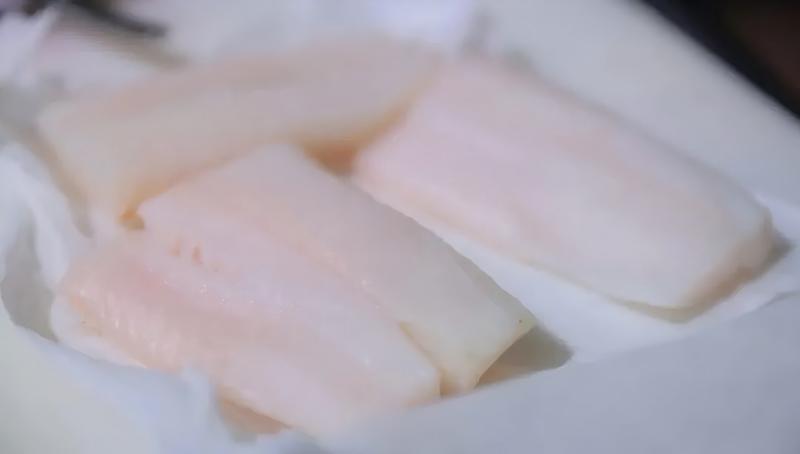
Chinese pollock processors collectively postponed their purchases, and the raw material prices of H&G pollock from Russia further dropped from historical highs.
In the 36th week, the CFR China quote for 25+ Russian pollock H&G dropped by approximately 125 US dollars per ton compared to the previous week, a decline of about 5%, but it was still about 850 US dollars per ton higher than the same period last year, an increase of 54%. On the US dollar market, the latest quote for Bering Sea pollock is $2,410 per ton, a cumulative decline of $160 per ton from the high of $2,570 per ton around August 20th, representing a drop of 6.6%. The dollar ex-warehouse price of pollock from Hubei Province has simultaneously dropped to $2,300 per ton. Some Russian suppliers described the decline as "quite sharp", and Chinese processing enterprises are "reluctant to purchase" at present.
This cycle of adjustment began in late August and became more and more obvious each week. The industry weekly report released on August 27th shows that the quoted price of Bering Sea pollock dropped by 80 US dollars per ton in a week to 2,490 US dollars per ton. By September 3rd, the latest quote had dropped to $2,410 per ton, with the cumulative decline from the peak expanding to 6.6%. The RMB quote for Ehai pollock in Qingdao and Dalian also fell from 17,800 yuan per ton to 17,700 yuan per ton.
The trigger factor has always been the same: upstream supplies arrive at the port in a concentrated manner and a large number of quotations are released. After the market weakens, downstream processing plants and purchasers "buy less and less as the price drops", and the wait-and-see mentality of buying when prices are rising but not when they are falling continues to suppress transactions, causing quotations to fall step by step. On the other side of the price loosening, the fishing progress is not weak. Data from the Russian Federal Fisheries Service shows that as of August 24, the cumulative number of pollock landed in Russia reached 1.6035 million tons, surpassing 17,500 tons in the same period last year.
For processors who plan to continue lowering prices, the time window is not generous. Industry sources indicate that prices may continue to decline in the coming weeks, but the market supply remains abundant until mid-October: some enterprises are ending their fishing in the Bering Sea and moving to the Kuril Islands and the waters around East Sakhalin Island for operations, while others are turning to catching herring to supply the domestic Russian market. After that, fishing boats will be sent to the factory for maintenance one after another, and the output of H&G will drop significantly. It will not be until the fleet is repaired and returns to the Sea of Okhotsk to resume production in December that supply will come back up.
The turning point of supply tightening occurred precisely before and after two major industry events: the Bottom Fish Forum was held in Nice, France in mid-October, and the Qingdao Fishery Expo opened at the end of October. Some market players thus judge that the price of H&G is expected to rise again by the end of the year, which is consistent with the market pattern that has occurred many times in history. The logical chain is already there: the output of one-time frozen fish blocks in the United States has dropped significantly, coupled with the relatively small number of individual catches from the Bering Sea, and the ability of Russian producers to fulfill one-time frozen orders is insufficient. As the Fish Forum approaches the Qingdao Fishery Expo, when purchasers find that their single-frozen fish block contracts cannot be fulfilled, they will turn to the secondary frozen products processed by H&G in a concentrated manner. The demand for secondary frozen products is likely to surge, and at that time, the market will once again intensify the competition for H&G raw materials.
On the other side of the high prices, China's fish fillet exports set a record in June. The export value of pollock fillet for the month was 100.075 million US dollars, with the export volume increasing by 49% to 25,424 tons and the average price rising by 39% to 3,963 US dollars per ton. In the first half of the year, the cumulative export volume reached 111,269 tons, an increase of 27%, and the export value was 398.43 million US dollars, an increase of 65%. The European Union is the largest source of increase: On June 9th, the European Commission announced its intention to impose sanctions on Russian white fish. Eventually, the 21st round of sanctions passed on July 23rd excluded all fishery measures. With the combination of early lead and replenishment, China's exports to the 27 EU countries soared to 71.69 million US dollars in June, a year-on-year increase of 130%. Germany led the growth with 43.49 million US dollars, an increase of 150%. Processing countries such as France, Poland and the Netherlands have simultaneously increased production. The price logic for exports to the United States is different. Starting from 2024, the United States will ban the import of H&G products from Russia and processed products from third countries. Fish fillets exported to the United States can only be made from raw materials produced in the United States. In June, the average price of China's exports to the United States was as high as 4,683 US dollars per ton, significantly higher than that of the European market.
While the US dollar market was retreating, the domestic market in Russia was strengthening. Driven by strong export demand and fluctuations in the ruble against the US dollar, the wholesale prices of true cod and pollock in the Russian Far East have continued to rise. The wholesale price of pollock has risen to 200 rubles per kilogram, an increase of 2.6% in a week, equivalent to approximately 2.32 US dollars per kilogram. The price of salmon continues to strengthen due to the slow progress of fishing. The railway freight for frozen fish from Vladivostok to Moscow is 32 to 36 rubles per kilogram. The firm domestic prices in Russia mean that Russian suppliers have more confidence to hold back their sales when the US dollar quotations fall.
The next observation points will focus on several aspects: the order trends at the bottom Fish Forum and the Qingdao Fishery Expo, which will determine whether the demand for secondary freezing can be fulfilled, and the rebound height of H&G prices at the end of the year. The size of the remaining fish caught in the Bering Sea of Russia determines how much leeway there is in one freezing contract. Whether the RMB quote of 17,700 yuan per ton at Qingdao Port continues to decline reflects how long domestic processors can maintain their wait-and-see attitude.