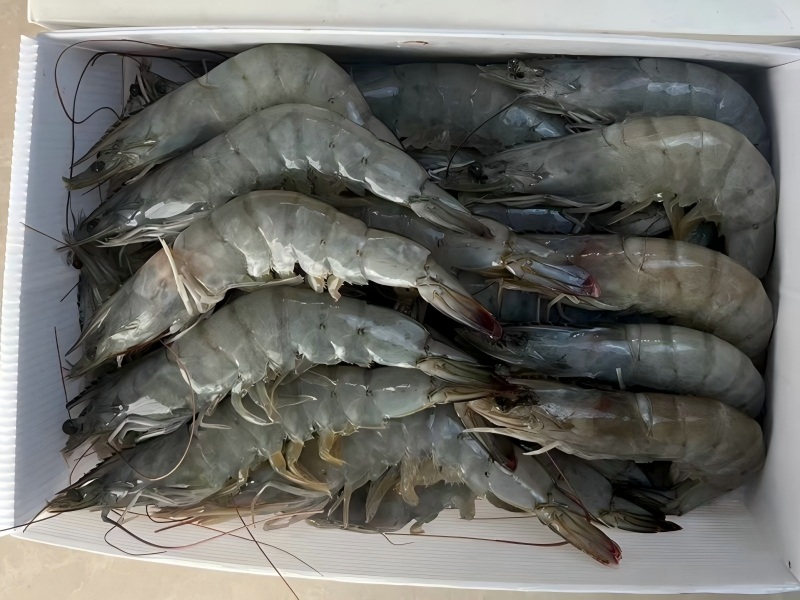
On July 16, the General Administration of Customs of China released information on food products that were not allowed to enter the country in June 2026. According to the HS code 0306179000, a total of 256 batches and 4,303.1 tons of imported white shrimp from South America were found to be substandard during inspection at Chinese ports. All of them have been lawfully returned or destroyed.
Sodium metabisulfite exceeding the standard accounted for nearly 90%, and the detection scope was expanded to include the heads and shells of shrimp
Among the 256 batches in June, 224 batches, weighing 4,007.9 tons, were stopped due to sodium metabisulfite not meeting the national food safety standards, accounting for 87.5% of the batches and 93.1% of the weight. The 7 batches involving both issues were split and calculated. The total number of batches related to sodium metabisulfite was 231, amounting to 4,093.0 tons, and the total number of batches related to animal diseases was 28, amounting to 293.6 tons. Excessive preservatives remain the primary reason why white shrimp from South America are rejected
GB 2760-2024 stipulates that the residual amount of sulfur dioxide in frozen aquatic products shall not exceed 100mg/kg. Recently, the customs has adjusted the inspection methods, expanding the determination of residual levels in parts such as the shrimp heads and shells. All Ecuadorian white shrimp goods must undergo 100% inspection, and the customs clearance period has been extended to two to three weeks.
Ecuador accounts for 93%, and Tianjin Port alone takes in 3,048.8 tons
Among the 238 batches of substandard products in Ecuador, 209 batches were found to have excessive sodium metabisulfite. Tianjin Port received 70.8% of the goods rejected in June. The weight of each batch was generally between 20 and 25 tons, corresponding to the pace of full container arrivals in 40-foot cold storage containers. The average single batch of 24 shipments in Xiamen exceeded 22 tons, the highest among all ports.
The seven Eritrean enterprises whose import declarations were suspended in July were precisely the ones that were rejected in June
In early July, the Chinese customs suspended the acceptance of import declarations for products dispatched by seven Ecuadorian shrimp processing enterprises on or after June 30, including major enterprises such as Santa Priscila, Omarsa, SONGA, PCC, Proposorja, and OceanTreasure. All six confirmed enterprises were on the list of those rejected in June, with a total of 153 batches and 2,947.7 tons rejected, accounting for 68.5% of the total weight rejected in June. Among them, SONGA was rejected 41 batches and 890.3 tons, topping the list.
The National Aquaculture Chamber of Ecuador (CNA) stated on July 9 that currently, a total of 14 enterprises are subject to varying degrees of restrictions. Some of the cases can be traced back to October 2025 and January 2026, mainly involving the testing standards for preservatives. CNA supports the establishment of a bilateral technical working group with China.
Zhejiang Yiwu China Commodity City Import and Export Co., Ltd. ranked first with 79 batches and 1,297.8 tons, accounting for 30.9% of the batches. The rejected goods mainly came from AQUAGOLD S.A. of Ecuador. Youhe Group Co., Ltd. was listed again after May with 10 batches of 72.8 tons. The company ranked first among importers in 2025 with 202 notifications throughout the year. The top 10 importers were rejected a total of 159 batches, weighing 2,665.7 tons, accounting for 62.1% of the total batches in June.
Prices showed their first divergence, with the 30/40 specification falling below $4
Entering the 29th week of 2026 (July 13th to 19th), quotations from Ecuadorian export enterprises showed a significant divergence for the first time. The quotations for 30/40 specification Semi-IQF white shrimp from some small and medium-sized processing enterprises have dropped below $4 per kilogram, while large export enterprises still maintain their previous quotations. Due to the reduction in orders, the increase in inventory and the rising demand for capital recovery, some small and medium-sized processing enterprises have voluntarily lowered their quotations to secure orders. The CFR China quote for 40/50 specification half IQF head with shell white shrimp continued to drop by 0.20 US dollars per kilogram in the 28th week.
Domestic wholesale market prices in China have also shown signs of loosening, with traders voluntarily lowering their selling prices to accelerate inventory turnover. Recently, a large number of shrimp have been produced in the southern domestic aquaculture areas, increasing market supply and putting pressure on the price of imported white shrimp. Port inventories remain at a relatively high level. Cold storage resources are tight and storage costs are rising. Importers are mainly focusing on reducing inventories, and the transaction speed of new orders has slowed down. Many purchasers are choosing to wait and see.
After the import declaration of seven Ecuadorian enterprises was suspended, the market once expected that supply would tighten and prices would be supported. However, as the transportation from Ecuador to China takes 35 to 50 days, the impact of the policy on actual supply still needs time to be reflected. When the General Administration of Customs releases the information on the next period of non-permitted entry in July, whether the white shrimp from South America will still remain at the 4,000-ton level and when the seven suspended enterprises will resume import declaration will be two key observation points for judging the trade trend in the second half of the year.